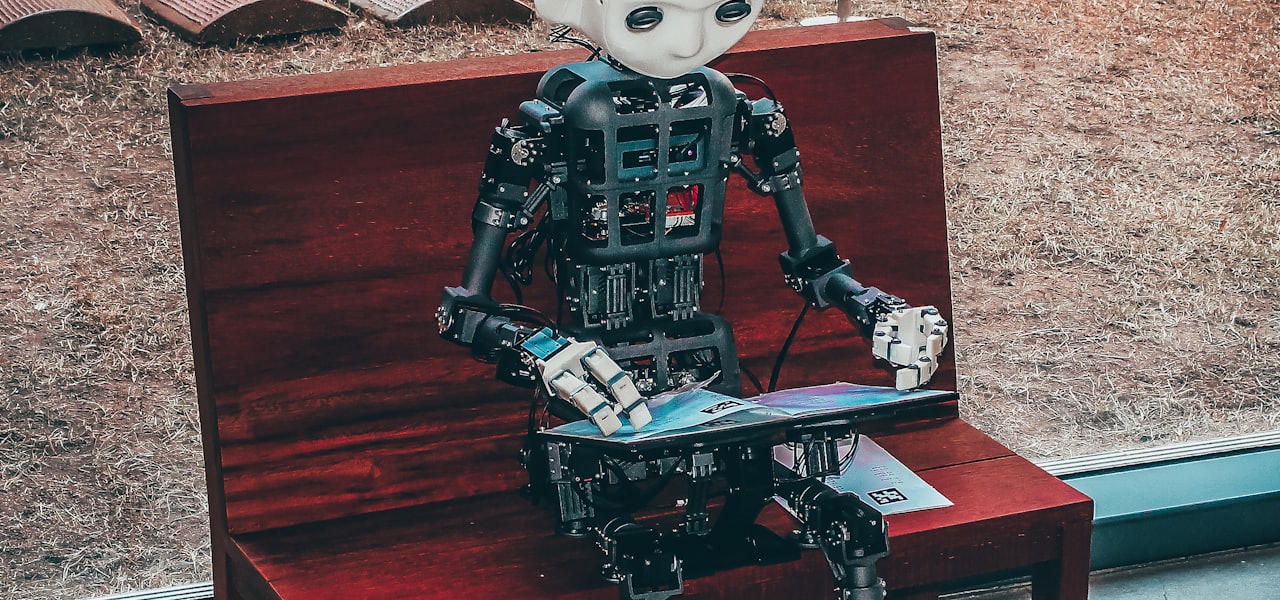
A reasoning model, also known as a reasoning language model (RLM) or large reasoning model (LRM), is a type of large language model (LLM) that has been specifically trained to solve complex tasks requiring multiple steps of logical reasoning. These models demonstrate superior performance on logic, mathematics, and programming tasks compared to standard LLMs. They possess the ability to revisit and revise earlier reasoning steps and utilize additional computation during inference as a method to scale performance, complementing traditional scaling approaches based on training data size, model parameters, and training compute. == Overview == Unlike traditional language models that generate responses immediately, reasoning models allocate additional compute, or thinking, time before producing an answer to solve multi-step problems. OpenAI introduced this terminology in September 2024 when it released the o1 series, describing the models as designed to "spend more time thinking" before responding. The company framed o1 as a reset in model naming that targets complex tasks in science, coding, and mathematics, and it contrasted o1's performance with GPT-4o on benchmarks such as AIME and Codeforces. Independent reporting the same week summarized the launch and highlighted OpenAI's claim that o1 automates chain-of-thought style reasoning to achieve large gains on difficult exams. In operation, reasoning models generate internal chains of intermediate steps, then select and refine a final answer. OpenAI reported that o1's accuracy improves as the model is given more reinforcement learning during training and more test-time compute at inference. The company initially chose to hide raw chains and instead return a model-written summary, stating that it "decided not to show" the underlying thoughts so researchers could monitor them without exposing unaligned content to end users. Commercial deployments document separate "reasoning tokens" that meter hidden thinking and a control for "reasoning effort" that tunes how much compute the model uses. These features make the models slower than ordinary chat systems while enabling stronger performance on difficult problems. == History == The research trajectory toward reasoning models combined advances in supervision, prompting, and search-style inference. Early alignment work on reinforcement learning from human feedback showed that models can be fine-tuned to follow instructions with "human feedback" and preference-based rewards. In 2022, Google Research scientists Jason Wei and Denny Zhou showed that chain-of-thought prompting "significantly improves the ability" of large models on complex reasoning tasks. Input → Step 1 → Step 2 → ⋯ → Step n ⏟ Reasoning chain → Answer {\displaystyle {\text{Input}}\rightarrow \underbrace {{\text{Step}}_{1}\rightarrow {\text{Step}}_{2}\rightarrow \cdots \rightarrow {\text{Step}}_{n}} _{\text{Reasoning chain}}\rightarrow {\text{Answer}}} A companion result demonstrated that the simple instruction "Let's think step by step" can elicit zero-shot reasoning. Follow-up work introduced self-consistency decoding, which "boosts the performance" of chain-of-thought by sampling diverse solution paths and choosing the consensus, and tool-augmented methods such as ReAct, a portmanteau of Reason and Act, that prompt models to "generate both reasoning traces" and actions. Research then generalized chain-of-thought into search over multiple candidate plans. The Tree-of-Thoughts framework from Princeton computer scientist Shunyu Yao proposes that models "perform deliberate decision making" by exploring and backtracking over a tree of intermediate thoughts. OpenAI's reported breakthrough focused on supervising reasoning processes rather than only outcomes, with Lightman et al.'s "Let's Verify Step by Step" reporting that rewarding each correct step "significantly outperforms outcome supervision" on challenging math problems and improves interpretability by aligning the chain-of-thought with human judgment. OpenAI's o1 announcement ties these strands together with a large-scale reinforcement learning algorithm that trains the model to refine its own chain of thought, and it reports that accuracy rises with more training compute and more time spent thinking at inference. Together, these developments define the core of reasoning models. They use supervision signals that evaluate the quality of intermediate steps, they exploit inference-time exploration such as consensus or tree search, and they expose controls for how much internal thinking compute to allocate. OpenAI's o1 family made this approach available at scale in September 2024 and popularized the label "reasoning model" for LLMs that deliberately think before they answer. The development of reasoning models illustrates Richard S. Sutton's "bitter lesson" that scaling compute typically outperforms methods based on human-designed insights. This principle was demonstrated by researchers at the Generative AI Research Lab (GAIR), who initially attempted to replicate o1's capabilities using sophisticated methods including tree search and reinforcement learning in late 2024. Their findings, published in the "o1 Replication Journey" series, revealed that knowledge distillation, a comparatively straightforward technique that trains a smaller model to mimic o1's outputs, produced unexpectedly strong performance. This outcome illustrated how direct scaling approaches can, at times, outperform more complex engineering solutions. === Drawbacks === Reasoning models require significantly more computational resources during inference compared to non-reasoning models. Research on the American Invitational Mathematics Examination (AIME) benchmark found that reasoning models were 10 to 74 times more expensive to operate than their non-reasoning counterparts. The extended inference time is attributed to the detailed, step-by-step reasoning outputs that these models generate, which are typically much longer than responses from standard large language models that provide direct answers without showing their reasoning process. One researcher in early 2025 argued that these models may face potential additional denial-of-service concerns with "overthinking attacks." === Releases === ==== 2024 ==== In September 2024, OpenAI released o1-preview, a large language model with enhanced reasoning capabilities. The full version, o1, was released in December 2024. OpenAI initially shared preliminary results on its successor model, o3, in December 2024, with the full o3 model becoming available in 2025. Alibaba released reasoning versions of its Qwen large language models in November 2024. In December 2024, the company introduced QvQ-72B-Preview, an experimental visual reasoning model. In December 2024, Google introduced Deep Research in Gemini, a feature designed to conduct multi-step research tasks. On December 16, 2024, researchers demonstrated that by scaling test-time compute, a relatively small Llama 3B model could outperform a much larger Llama 70B model on challenging reasoning tasks. This experiment suggested that improved inference strategies can unlock reasoning capabilities even in smaller models. ==== 2025 ==== In January 2025, DeepSeek released R1, a reasoning model that achieved performance comparable to OpenAI's o1 at significantly lower computational cost. The release demonstrated the effectiveness of Group Relative Policy Optimization (GRPO), a reinforcement learning technique used to train the model. On January 25, 2025, DeepSeek enhanced R1 with web search capabilities, allowing the model to retrieve information from the internet while performing reasoning tasks. Research during this period further validated the effectiveness of knowledge distillation for creating reasoning models. The s1-32B model achieved strong performance through budget forcing and scaling methods, reinforcing findings that simpler training approaches can be highly effective for reasoning capabilities. On February 2, 2025, OpenAI released Deep Research, a feature powered by their o3 model that enables users to conduct comprehensive research tasks. The system generates detailed reports by automatically gathering and synthesizing information from multiple web sources. OpenAI called GPT-4.5 its "last non-chain-of-thought model", and implemented with GPT-5 a router model that selects a model based on the difficulty of the task. ==== 2026 ==== In January 2026, Moonshot AI released Kimi K2.5, an open-source 1 trillion parameter MoE model with 32 billion active parameters. It uses an “Agent Swarm” system that dynamically decomposes tasks into sub-agents for reasoning and execution, enabling more scalable multi-step problem solving than a single sequential reasoning chain. == Training == Reasoning models follow the familiar large-scale pretraining used for frontier language models, then diverge in the post-training and optimization. OpenAI reports that o1 is trained with a large-
Digital supply chain security
Digital supply chain security refers to efforts to enhance cyber security within the supply chain. It is a subset of supply chain security and is focused on the management of cyber security requirements for information technology systems, software and networks, which are driven by threats such as cyber-terrorism, malware, data theft and the advanced persistent threat (APT). Typical supply chain cyber security activities for minimizing risks include buying only from trusted vendors, disconnecting critical machines from outside networks, and educating users on the threats and protective measures they can take. The acting deputy undersecretary for the National Protection and Programs Directorate for the United States Department of Homeland Security, Greg Schaffer, stated at a hearing that he is aware that there are instances where malware has been found on imported electronic and computer devices sold within the United States. == Examples of supply chain cyber security threats == Network or computer hardware that is delivered with malware installed on it already. Malware that is inserted into software or hardware (by various means) Vulnerabilities in software applications and networks within the supply chain that are discovered by malicious hackers Counterfeit computer hardware == Related U.S. government efforts == Comprehensive National Cyber Initiative Defense Procurement Regulations: Noted in section 806 of the National Defense Authorization Act International Strategy for Cyberspace: White House lays out for the first time the U.S.’s vision for a secure and open Internet. The strategy outlines three main themes: diplomacy, development and defense. Diplomacy: The strategy sets out to “promote an open, interoperable, secure and reliable information and communication infrastructure” by establishing norms of acceptable state behavior built through consensus among nations. Development: Through this strategy the government seeks to “facilitate cybersecurity capacity-building abroad, bilaterally and through multilateral organizations.” The objective is to protect the global IT infrastructure and to build closer international partnerships to sustain open and secure networks. Defense: The strategy calls out that the government “will ensure that the risks associated with attacking or exploiting our networks vastly outweigh the potential benefits” and calls for all nations to investigate, apprehend and prosecute criminals and non-state actors who intrude and disrupt network systems. == Related government efforts around the world == Common Criteria offers with Evaluation Assurance Level(EAL) 4 an opportunity to evaluate all relevant aspects of the digital supply chain security like the product, the development environment, IT systems security, the processes in human resource, physical security and with the module ALC_FLR.3 (Systematic Flaw Remediation) also security update processes and methods even by physical site visits. EAL 4 is mutually recognized in countries that signed the SOGIS-MRA and up to ELA 2 in countries the signed the CCRA but including ALC_FRL.3. Russia: Russia has had non-disclosed functionality certification requirements for several years and has recently initiated the National Software Platform effort based on open-source software. This reflects the apparent desire for national autonomy, reducing dependence on foreign suppliers. India: Recognition of supply chain risk in its draft National Cybersecurity Strategy. Rather than targeting specific products for exclusion, it is considering Indigenous Innovation policies, giving preferences to domestic ITC suppliers in order to create a robust, globally competitive national presence in the sector. China: Deriving from goals in the 11th Five Year Plan (2006–2010), China introduced and pursued a mix of security-focused and aggressive Indigenous Innovation policies. China is requiring an indigenous innovation product catalog be used for its government procurement and implementing a Multi-level Protection Scheme (MLPS) which requires (among other things) product developers and manufacturers to be Chinese citizens or legal persons, and product core technology and key components must have independent Chinese or indigenous intellectual property rights. == Private sector efforts == SLSA (Supply-chain Levels for Software Artifacts) is an end-to-end framework for ensuring the integrity of software artifacts throughout the software supply chain. The requirements are inspired by Google’s internal "Binary Authorization for Borg" that has been in use for the past 8+ years and that is mandatory for all of Google's production workloads. The goal of SLSA is to improve the state of the industry, particularly open source, to defend against the most pressing integrity threats. With SLSA, consumers can make informed choices about the security posture of the software they consume. == Other references == Financial Sector Information Sharing and Analysis Center International Strategy for Cyberspace (from the White House) NSTIC SafeCode Whitepaper Archived 2013-10-21 at the Wayback Machine Trusted Technology Forum and the Open Trusted Technology Provider Standard (O-TTPS) Archived 2012-01-03 at the Wayback Machine Cyber Supply Chain Security Solution Malware Implants in Firmware Supply Chain in the Software Era INFORMATION AND COMMUNICATIONS TECHNOLOGY SUPPLY CHAIN RISK MANAGEMENT TASK FORCE: INTERIM REPORT
Mark I Perceptron
The Mark I Perceptron was a pioneering supervised image classification learning system developed by Frank Rosenblatt in 1958. It was the first implementation of an artificial intelligence (AI) machine. It differs from the Perceptron which is a software architecture proposed in 1943 by Warren McCulloch and Walter Pitts, which was also employed in Mark I, and enhancements of which have continued to be an integral part of cutting edge AI technologies like the Transformer. == Architecture == The Mark I Perceptron was organized into three layers: A set of sensory units which receive optical input A set of association units, each of which fire based on input from multiple sensory units A set of response units, which fire based on input from multiple association units The connection between sensory units and association units were random. The working of association units was very similar to the response units. Different versions of the Mark I used different numbers of units in each of the layers. == Capabilities == In his 1957 proposal for funding for development of the "Cornell Photoperceptron", Rosenblatt claimed:"Devices of this sort are expected ultimately to be capable of concept formation, language translation, collation of military intelligence, and the solution of problems through inductive logic."With the first version of the Mark I Perceptron as early as 1958, Rosenblatt demonstrated a simple binary classification experiment, namely distinguishing between sheets of paper marked on the right versus those marked on the left side. One of the later experiments distinguished a square from a circle printed on paper. The shapes were perfect and their sizes fixed; the only variation was in their position and orientation. The Mark I Perceptron achieved 99.8% accuracy on a test dataset with 500 neurons in a single layer. The size of the training dataset was 10,000 example images. It took 3 seconds for the training pipeline to go through a single image. Higher accuracy was observed with thick outline figures compared to solid figures, likely because outline figures reduced overfitting. Another experiment distinguished between a square and a diamond for which 100% accuracy was achieved with only 60 training images, with a Perceptron having 1,000 neurons in a single layer. The time taken to process each training input for this larger perceptron was 15 seconds. The only variation was in position of the image, since rotation would have been ambiguous. In that same experiment, it could distinguish between the letters X and E with 100% accuracy when trained with only 20 images (10 images of each letter). Variations in the images included both position and rotation by up to 30 degrees. When variation in rotation was increased to any angle (both in training and test datasets), the accuracy reduced to 90% with 60 training images (30 images of each letter). For distinguishing between the letters E and F, a more challenging problem due to their similarity, the same 1,000 neuron perceptron achieved an accuracy of more than 80% with 60 training images. Variation was only in the position of the image, with no rotation.
Perry Rhodan
Perry Rhodan is a German space opera franchise, named after its hero. It commenced in 1961 and has been ongoing for decades, written by an ever-changing team of authors. Having sold approximately two billion copies (in novella format) worldwide (including over one billion in Germany alone), it is the most successful science fiction book series ever written. The first billion of worldwide sales was celebrated in 1986. The series has spun off into comic books, audio dramas, video games and the like. A reboot, Perry Rhodan NEO, was launched in 2011 and began publication in English in April 2021. == Print publication == The series has spun off into many different forms of media, but originated as a serial novella published weekly since 8 September 1961 in the Romanheft (Meaning "Magazine novel") format. These are digest-sized booklets, usually containing 66 pages, the German equivalent of the now-defunct (and generally longer) American pulp magazine. They are published by Pabel-Moewig Verlag, a subsidiary of Bauer Media Group headquartered in Hamburg. As of February 2019, 3000 booklet novels of the original series, 850 spinoff novels of the sister series Atlan and over 400 paperbacks and 200 hardcover editions have been published, totalling over 300,000 pages. == English translation == The first 126 novels (plus five novels of the spinoff series Atlan) were translated into English and published by Ace Books between 1969 and 1978, with the same translations used for the British edition published by Futura Publications which issued only 39 novels. When Ace cancelled its translation of the series, translator Wendayne Ackerman self-published the following 19 novels (under the business name 'Master Publications') and made them available by subscription only. Financial disputes with the German publishers led to the cancellation of the American translation in 1979. An attempt to revive the series in English was made in 1997–1998 by Vector Publications of the US, which published translations of four issues (1800–1803) from the current storyline being published in Germany at the time. The series and its spin-offs have captured a substantial fraction of the original German science fiction output and exert influence on many German writers in the field. == Structure == The series is told in an arc storyline structure. An arc—called a "cycle"—would have anywhere from 25 to 100 issues devoted to it. Similar subsequent cycles are referred to as a "grand-cycle". == History == ‘Perry Rhodan, der Erbe des Universums’ (Eng: ‘The Heir to the Universe’, though the American/British editions instead used the subtitle 'Peacelord of the Universe') was created by German science fiction authors K. H. Scheer and Walter Ernsting and launched in 1961 by German publishing house Arthur Moewig Verlag (now Pabel-Moewig Verlag). Originally planned as a 30 to 50 volume series, it has been published continuously every week since, celebrating the 3000th issue in 2019. Written by an ever-changing team of authors, many of whom, however, remained with the series for decades or life, Perry Rhodan is issued in weekly novella-size installments in the traditional German Heftroman (pulp booklet) format. Unlike most German Heftromane, Perry Rhodan consists not of unconnected novels but is a series with a continuous, increasingly complex plotline, with frequent back references to events. In addition to its original Heftroman form, the series now also appears in hardcovers, paperbacks, e-books, comics and audiobooks. Over the decades there have also been comic strips, numerous collectibles, several encyclopedias, audio plays, inspired music, etc. The series has seen partial translations into several languages. It also spawned the German-Italian-Spanish 1967 movie Mission Stardust, which is widely considered so terrible that many fans of the series pretend it never existed. Coinciding with the 50th-anniversary World Con, on 30 September 2011, a new series named Perry Rhodan Neo began publication, attracting new readers with a reboot of the story, starting in the year 2036 instead of 1971, and a related but independent story-line. On 2 April 2021, light novel and manga publisher J-Novel Club announced Perry Rhodan NEO as a launch title for its new J-Novel Pulp imprint, making this the first ongoing English release of new Perry Rhodan serials in over 20 years. It has become the most popular science fiction book series of all time. == Overview == === Fictional history === The story begins in 1971. During the first human Moon landing by US Space Force Major Perry Rhodan and his crew, they discover a marooned extraterrestrial space ship from the fictional planet Arkon, located in the (real) M13 cluster. Appropriating the Arkonide technology, they proceed to unify Terra and carve out a place for humanity in the galaxy and the cosmos. Two of the accomplishments that enable them to do so are positronic brains and starship drives for near-instantaneous hyperspatial translation. These were directly borrowed from Isaac Asimov's science fiction. As the series progresses, major characters, including the title character, are granted relative immortality. They are immune to age and disease, but not to violent death. The story continues over the course of millennia and includes flashbacks thousands and even millions of years into the past. The scope widens to encompass other galaxies, even more remote regions of space, parallel universes and cosmic structures, time travel, paranormal powers, a variety of aliens ranging from threatening to endearing, and bodiless entities, some of which have godlike powers. === Multiverse === The universe in which the main plot generally takes place is called the Einstein Universe (or "Meekorah"). Its laws are for the most part identical to those of the real universe, as known by late 20th century science. Newer theories about dark matter and dark energy are currently not used in the series. The laws of nature follow old theories that have been disproven, in order to protect series continuity. There are many other universes, each to a greater or lesser extent different from the familiar one, in which, for example one in which time runs slower, an anti-matter universe, a shrinking universe, etc. Each universe possesses its owntimelines, which are for the most part unreachable from each other but may be accessed by special means, thereby itself creating many more parallel timelines. The Einstein Universe is embedded in a high-dimensional manifold, called Hyperspace. This hyperspace consists of several subspaces use for faster-than-light travel by technological means. The exact traits of those higher dimensions are got yhr mode pity unexplained. The border of the universe is a dimension called the deep, once used for construction of the gigantic disc-shaped world Deepland. === Psionic Web and Moral Code === The Psionic Web crosses the whole universe, constantly emitting "vital energy" and "psionic energy", guaranteeing normal (organic among others) life and the wellbeing of higher entities. The Moral Code crosses through all universes, and is linked to the Psionic Web. It is subdivided into the Cosmogenes, which are again subdivided into the Cosmonucleotids. The Cosmonucleotids determine reality and fate for their respective parts of a given universe, via messengers. Higher beings are trying to gain control of this Code to rule reality. The Moral Code itself was not installed by the higher beings, the higher powers by themselves have no clue why or by whom the Code was made. Once the Cosmocrats ordered Perry Rhodan to find the answer to the third ultimate question: "Who initiated the LAW and what does it accomplish?" Perry Rhodan had the chance to receive the answer at the mountain of creation, but refused, as he knew that the answer would destroy his mind. The negative Superintelligence Koltoroc had received the answer to the last ultimate question, 69 million years BC at Negane Mountain, but it is not known if it made any use of the information. === Onion-shell model === An evolutionary schema, similar to the Great Chain of Being, called the "onion-shell model" is employed in relationship to all life. Here, continuous evolution is from lower to higher lifeforms, culminating in bodiless entities. Later in the series, further lifeforms, representing stages between the known shells, were introduced. The main shells are: Lifeless matter Bacteria Higher animals Intelligent species Intelligent species that have contacted other species Superintelligences (SI) Matter sources/ Matter sinks Cosmocrats / Chaotarchs (High Powers) Powers close to the "Horizon of the LAW", the essence of the Multiverse The Superintelligences are the next step above normal minds. They can be born, for example, when a species collectively gives up its bodies and unites their spirits. Such Superintelligences may claim as their domain areas consisting of up to several galaxies (the entity known as "E
Roborace
Roborace was a competition with autonomously driving, electrically powered vehicles. Founded in 2015 by Denis Sverdlov, it aimed to be the first global championship for autonomous cars. From 2017 to 2019, the official CEO was 2016–17 Formula E champion, Lucas Di Grassi, who later became a member of Roborace’s supervisory board. The series tested their technology and race formats at FIA Formula E Championship events during 2016–2018. In 2019 Roborace organized Season Alpha, which consisted of 4 trial racing events with several independent teams competing against each other for the first time. In 2020–21 Roborace held Season Beta with 7 competing teams. All teams utilized the same chassis and powertrain, but they had to develop their own real-time computing algorithms and artificial intelligence technologies. In May 2022, Arrival, the owner of Roborace, confirmed that they were no longer continuing the Roborace programme, but that they were hoping to find alternative funding. In February 2024, after getting its stock delisted from the Nasdaq, Arrival's UK division entered administration, with future plans of a sale of Arrival and all of its affiliated assets. == Cars == === Robocar === The world's first purpose-built autonomous racing car, Robocar, was designed by Daniel Simon, who previously worked on vehicles for movies such as Tron: Legacy and Oblivion, as well as designing the livery for the 2011 HRT Formula One car. Michelin is the official tyre supplier, and the internal computing processors (Drive PX 2) are Nvidia. The chassis itself is shaped like a teardrop, improving aerodynamic efficiency. The car weighs around 1350 kg and is 4.8 metres (16 ft) long and 2 metres (6.6 ft) wide. It has four electric motors, each with a power of 135 kW producing over 500 hp combined, and utilizes a 840V battery. For navigation, it relies on a mixture of optical systems, radars, lidars and ultrasonic sensors. The vehicle has been demonstrated at speeds of almost 300 km/h (190 mph). === DevBot === Development of the Robocar started in early 2016, with a first outing of a test vehicle, the so-called DevBot, following in the summer of the same year. The test car consisted of the same internal units (battery, motor, electronics) used in the Robocar, but were placed in the chassis of a Ginetta LMP3 car without an engine cover in order to provide better cooling and access. DevBot saw its first public outing at the Formula E pre-season tests in Donington Park in August 2016. After battery issues in Hong Kong caused the development team to abandon their demonstration run, the DevBot successfully drove twelve laps around the Moulay El Hassan Formula E circuit in Marrakesh. Other test tracks included Michelin's testing ground in Ladoux and the Silverstone Stowe Circuit. During testing ahead of the 2017 Buenos Aires ePrix, two DevBot cars raced against each other autonomously, resulting in one of the vehicles crashing on a corner. During the 2017–18 Formula E season, Roborace pitched pro-drifter Ryan Tuerck against a DevBot at the Rome ePrix. At the Berlin ePrix, Roborace held the Human + Machine Challenge, the first race for combined teams of human drivers and AIs using a pair of Devbots. === DevBot 2.0 === An upgraded version of DevBot was announced in late 2018, and after private testing made its public debut in 2019 at the inaugural Season Alpha event. DevBot 2.0 uses the same technology as both Robocar and DevBot, with the main changes being a conversion to being driven on the rear axle only, a lower position for the driver for safety reasons and a bespoke composite bodywork. == Seasons == === Testing === ==== 2016–17 Formula E season ==== Roborace appeared at a number of Formula E events during the 2016–17 Formula E season. However, in this period only test drives with two different DevBots took place. Within the framework of the 2017 Buenos Aires ePrix both DevBot vehicles drove against each other on a race track for the first time. There were also DevBot demonstrations at the 2016 Marrakesh ePrix, 2017 Berlin ePrix, 2017 New York City ePrix and 2017 Montreal ePrix. At the 2017 Paris ePrix, the developers also let a Robocar onto the track for the first time, even though the vehicle only drove the track at walking speed. ==== 2017–18 Formula E season ==== At the start of the 2017/18 Formula E season, the Roborace developers once again tested the DevBot during a public time trial between the Roborace CI and the TV presenter Nicki Shields at the 2017 Hong Kong ePrix. As part of a similar time trial at the 2018 Rome ePrix, drift professional Ryan Tuerck also tested the DevBot. The Human + Machine Challenge was created for the Formula E race on the Berlin ePrix. A team of doctoral students from the Technical University of Munich (TUM) and the University of Pisa programmed the software for the Devbot to drive autonomously around the circuit in Berlin. Afterwards both teams in combination with a human driver competed in a public time trial. The vehicle of the team of the Technical University of Munich finished the Human + Machine Challenge with an average lap time of 91.59 seconds, almost four seconds faster than that of the University of Pisa with 95.36 seconds and thus won the Challenge. At the Goodwood Festival of Speed, Robocar became the first ever fully autonomous race car to complete the Goodwood Hill Climb. The vehicle completed the first official autonomous run on 13 July 2018 within the framework of the event. === Season Alpha (2019) === Season Alpha took place at various locations in Europe and North America with the aim of testing several competition formats using the new DevBot 2.0. The first event was held at the Circuito Monteblanco in Spain, and featured the first race between two fully autonomous cars. The events were not broadcast live, instead short clips on YouTube were released. Two teams were competing: Arrival and the Technical University of Munich. On 7 July 2019, the Roborace DevBot 2.0 car set the first ever autonomous official timed run at Goodwood Festival of Speed, with a time of 66.96 s and a top speed of 162.8 km/h (101.2 mph). This is currently the record for autonomous vehicles. Roborace also set the Guinness World Record for having the fastest autonomous car in the world. The Robocar reached a speed of 282.42 km/h (175.49 mph). === Season Beta (2020–21) === The second testing season took place at various locations between September 2020 and October 2021, featuring 16 races and involving mixed reality elements dubbed "Roborace Metaverse", which is based on Roborace's patented technology. The program of Season Beta competitions has gradually complicating rules arranged in a progression of so-called missions. Each mission consists of two racing rounds — one round per day. A mission plan issued by Roborace for each mission defines its objectives, rules, and point-scoring system. The key objective of Season Beta is to come to the point when the majority of competing teams have developed sufficient capability for wheel-to-wheel racing in Season 1. There were 7 teams competing in Season Beta: Arrival Racing (UK/Russia), Autonomous Racing Graz (Austria), MIT Driverless (United States), Acronis SIT (Switzerland), University of Pisa (Italy), PoliMOVE (Italy), CMU (United States).
Semantic space
Semantic spaces in the natural language domain aim to create representations of natural language that are capable of capturing meaning. The original motivation for semantic spaces stems from two core challenges of natural language: Vocabulary mismatch (the fact that the same meaning can be expressed in many ways) and ambiguity of natural language (the fact that the same term can have several meanings). The application of semantic spaces in natural language processing (NLP) aims at overcoming limitations of rule-based or model-based approaches operating on the keyword level. The main drawback with these approaches is their brittleness, and the large manual effort required to create either rule-based NLP systems or training corpora for model learning. Rule-based and machine learning based models are fixed on the keyword level and break down if the vocabulary differs from that defined in the rules or from the training material used for the statistical models. Research in semantic spaces dates back more than 20 years. In 1996, two papers were published that raised a lot of attention around the general idea of creating semantic spaces: latent semantic analysis and Hyperspace Analogue to Language. However, their adoption was limited by the large computational effort required to construct and use those semantic spaces. A breakthrough with regard to the accuracy of modelling associative relations between words (e.g. "spider-web", "lighter-cigarette", as opposed to synonymous relations such as "whale-dolphin", "astronaut-driver") was achieved by explicit semantic analysis (ESA) in 2007. ESA was a novel (non-machine learning) based approach that represented words in the form of vectors with 100,000 dimensions (where each dimension represents an Article in Wikipedia). However practical applications of the approach are limited due to the large number of required dimensions in the vectors. More recently, advances in neural network techniques in combination with other new approaches (tensors) led to a host of new recent developments: Word2vec from Google, GloVe from Stanford University, and fastText from Facebook AI Research (FAIR) labs.
Data analysis for fraud detection
Fraud represents a significant problem for governments and businesses and specialized analysis techniques for discovering fraud using them are required. Some of these methods include knowledge discovery in databases (KDD), data mining, machine learning and statistics. They offer applicable and successful solutions in different areas of electronic fraud crimes. In general, the primary reason to use data analytics techniques is to tackle fraud since many internal control systems have serious weaknesses. For example, the currently prevailing approach employed by many law enforcement agencies to detect companies involved in potential cases of fraud consists in receiving circumstantial evidence or complaints from whistleblowers. As a result, a large number of fraud cases remain undetected and unprosecuted. In order to effectively test, detect, validate, correct error and monitor control systems against fraudulent activities, businesses entities and organizations rely on specialized data analytics techniques such as data mining, data matching, the sounds like function, regression analysis, clustering analysis, and gap analysis. Techniques used for fraud detection fall into two primary classes: statistical techniques and artificial intelligence. == Statistical techniques == Examples of statistical data analysis techniques are: Data preprocessing techniques for detection, validation, error correction, and filling up of missing or incorrect data. Calculation of various statistical parameters such as averages, quantiles, performance metrics, probability distributions, and so on. For example, the averages may include average length of call, average number of calls per month and average delays in bill payment. Models and probability distributions of various business activities either in terms of various parameters or probability distributions. Computing user profiles. Time-series analysis of time-dependent data. Clustering and classification to find patterns and associations among groups of data. Data matching Data matching is used to compare two sets of collected data. The process can be performed based on algorithms or programmed loops. Trying to match sets of data against each other or comparing complex data types. Data matching is used to remove duplicate records and identify links between two data sets for marketing, security or other uses. Sounds like Function is used to find values that sound similar. The Phonetic similarity is one way to locate possible duplicate values, or inconsistent spelling in manually entered data. The ‘sounds like’ function converts the comparison strings to four-character American Soundex codes, which are based on the first letter, and the first three consonants after the first letter, in each string. Regression analysis allows you to examine the relationship between two or more variables of interest. Regression analysis estimates relationships between independent variables and a dependent variable. This method can be used to help understand and identify relationships among variables and predict actual results. Gap analysis is used to determine whether business requirements are being met, if not, what are the steps that should be taken to meet successfully. Matching algorithms to detect anomalies in the behavior of transactions or users as compared to previously known models and profiles. Techniques are also needed to eliminate false alarms, estimate risks, and predict future of current transactions or users. Some forensic accountants specialize in forensic analytics which is the procurement and analysis of electronic data to reconstruct, detect, or otherwise support a claim of financial fraud. The main steps in forensic analytics are data collection, data preparation, data analysis, and reporting. For example, forensic analytics may be used to review an employee's purchasing card activity to assess whether any of the purchases were diverted or divertible for personal use. == Artificial intelligence == Fraud detection is a knowledge-intensive activity. The main AI techniques used for fraud detection include: Data mining to classify, cluster, and segment the data and automatically find associations and rules in the data that may signify interesting patterns, including those related to fraud. Expert systems to encode expertise for detecting fraud in the form of rules. Pattern recognition to detect approximate classes, clusters, or patterns of suspicious behavior either automatically (unsupervised) or to match given inputs. Machine learning techniques to automatically identify characteristics of fraud. Neural nets to independently generate classification, clustering, generalization, and forecasting that can then be compared against conclusions raised in internal audits or formal financial documents such as 10-Q. Other techniques such as link analysis, Bayesian networks, decision theory, and sequence matching are also used for fraud detection. A new and novel technique called System properties approach has also been employed where ever rank data is available. Statistical analysis of research data is the most comprehensive method for determining if data fraud exists. Data fraud as defined by the Office of Research Integrity (ORI) includes fabrication, falsification and plagiarism. == Machine learning and data mining == Early data analysis techniques were oriented toward extracting quantitative and statistical data characteristics. These techniques facilitate useful data interpretations and can help to get better insights into the processes behind the data. Although the traditional data analysis techniques can indirectly lead us to knowledge, it is still created by human analysts. To go beyond, a data analysis system has to be equipped with a substantial amount of background knowledge, and be able to perform reasoning tasks involving that knowledge and the data provided. In effort to meet this goal, researchers have turned to ideas from the machine learning field. This is a natural source of ideas, since the machine learning task can be described as turning background knowledge and examples (input) into knowledge (output). If data mining results in discovering meaningful patterns, data turns into information. Information or patterns that are novel, valid and potentially useful are not merely information, but knowledge. One speaks of discovering knowledge, before hidden in the huge amount of data, but now revealed. The machine learning and artificial intelligence solutions may be classified into two categories: 'supervised' and 'unsupervised' learning. These methods seek for accounts, customers, suppliers, etc. that behave 'unusually' in order to output suspicion scores, rules or visual anomalies, depending on the method. Whether supervised or unsupervised methods are used, note that the output gives us only an indication of fraud likelihood. No stand alone statistical analysis can assure that a particular object is a fraudulent one, but they can identify them with very high degrees of accuracy. As a result, effective collaboration between machine learning model and human analysts is vital to the success of fraud detection applications. === Supervised learning === In supervised learning, a random sub-sample of all records is taken and manually classified as either 'fraudulent' or 'non-fraudulent' (task can be decomposed on more classes to meet algorithm requirements). Relatively rare events such as fraud may need to be over sampled to get a big enough sample size. These manually classified records are then used to train a supervised machine learning algorithm. After building a model using this training data, the algorithm should be able to classify new records as either fraudulent or non-fraudulent. Supervised neural networks, fuzzy neural nets, and combinations of neural nets and rules, have been extensively explored and used for detecting fraud in mobile phone networks and financial statement fraud. Bayesian learning neural network is implemented for credit card fraud detection, telecommunications fraud, auto claim fraud detection, and medical insurance fraud. Hybrid knowledge/statistical-based systems, where expert knowledge is integrated with statistical power, use a series of data mining techniques for the purpose of detecting cellular clone fraud. Specifically, a rule-learning program to uncover indicators of fraudulent behaviour from a large database of customer transactions is implemented. Cahill et al. (2000) design a fraud signature, based on data of fraudulent calls, to detect telecommunications fraud. For scoring a call for fraud its probability under the account signature is compared to its probability under a fraud signature. The fraud signature is updated sequentially, enabling event-driven fraud detection. Link analysis comprehends a different approach. It relates known fraudsters to other individuals, using record linkage and social network methods. This type of detection is only able to detect fra